
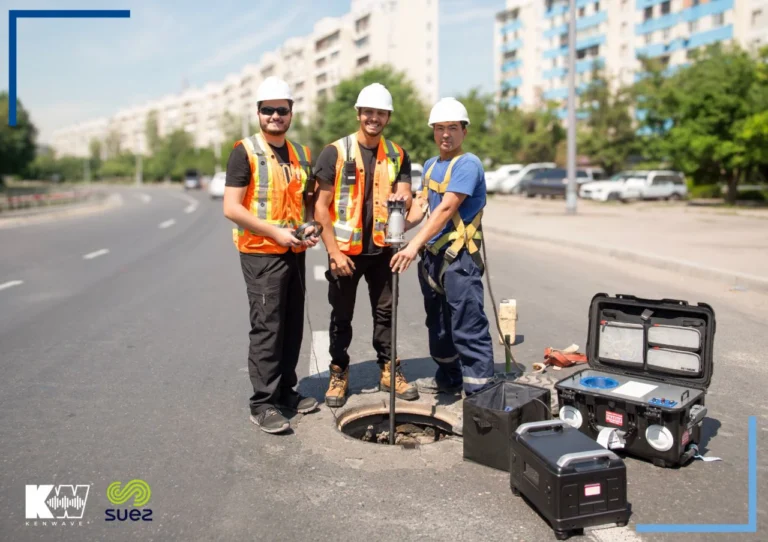
Uzbekistan Pipeline Condition Assessment Project
KenWave worked alongside SUEZ and Toshkent shahar suv ta’minoti to assess approximately 2.7 kilometres of critical water pipelines in Tashkent, Uzbekistan. Using DRI™, the team collected high-resolution condition data across steel and cast iron pipelines ranging from 400 mm to 800 mm without disrupting normal operations.
KenWave Team Expansion Supports Continued Growth
KenWave continues to grow its team as project activity and international reach expand. Learn how their experience will strengthen KenWave’s ability to support utilities and engineering partners worldwide.

Peer-Reviewed Pipeline Condition Assessment Research
Two peer-reviewed papers presented through ASCE Pipelines 2026 explore the use of Dynamic Response Imaging (DRI™) for assessing critical buried pipelines. Drawing on real-world applications involving prestressed concrete cylinder pipe and asbestos cement pipe, the research demonstrates how measured condition data can support more confident asset management decisions.
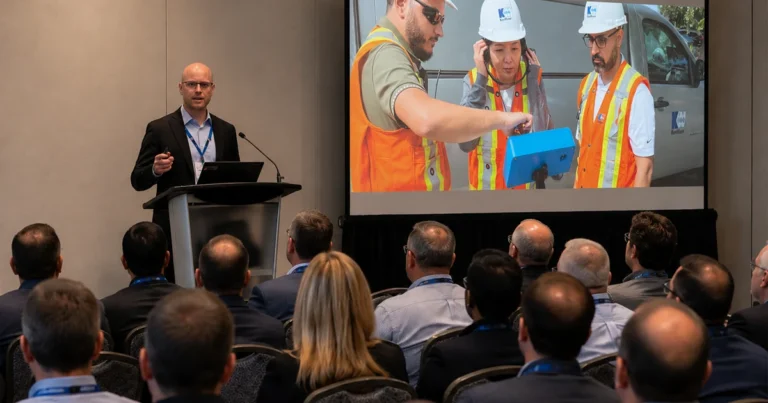
UESI Pipelines 2026 Conference
Join KenWave Solutions at UESI Pipelines 2026 in Detroit, MI. Visit Booth #613 and attend two peer-reviewed technical presentations exploring pipeline condition assessment, asset management, and collaborative research with leading utilities across North America and Europe.
AWWA ACE26
Visit KenWave at Booth #438 during the AWWA ACE26 Conference & Expo and learn how external, non-invasive condition assessments are helping utilities assess aging pipelines with confidence—while keeping service uninterrupted.
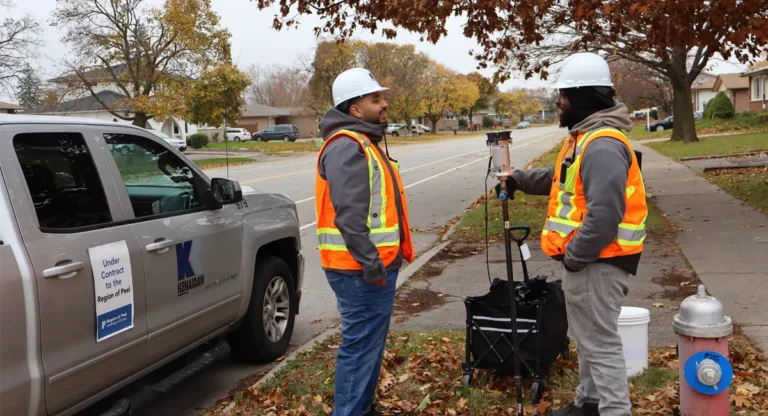
Region of Peel: Large-Scale Metallic Watermain Condition Assessment
The Region of Peel assessed over 50 km (31 mi) of metallic watermains using non-invasive vibroacoustic inspection to strengthen its risk-based renewal framework. By integrating Dynamic Response Imaging™ data into its Decision Support System, the Region improved deterioration modeling, prioritized 22 km of high-risk mains for renewal, and optimized long-term capital planning.