

Dynamic Response Imaging™ (DRI™)
Revolutionizing Pipeline Condition Assessment
Acoustic & Vibroacoustic DRI Technology
Dynamic Response Imaging (DRI) offers a breakthrough in non-invasive pipeline inspection, providing detailed condition assessments without interrupting service using both acoustics and vibroacoustics.
The DRI Inspection Process
Patent-pending DRI leverages both advanced acoustic and vibroacoustic technologies to externally evaluate the health of water pipelines, all while keeping the pipe fully operational and in service.
Here’s how an inspection unfolds:
1. Signal Introduction
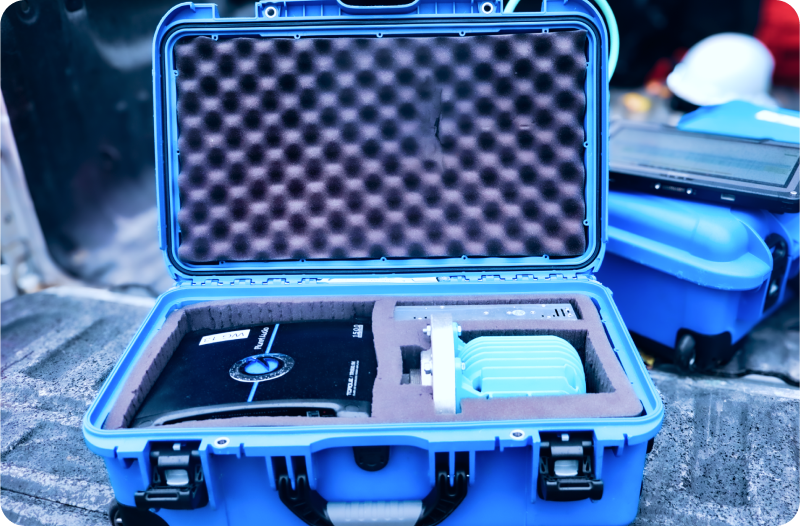
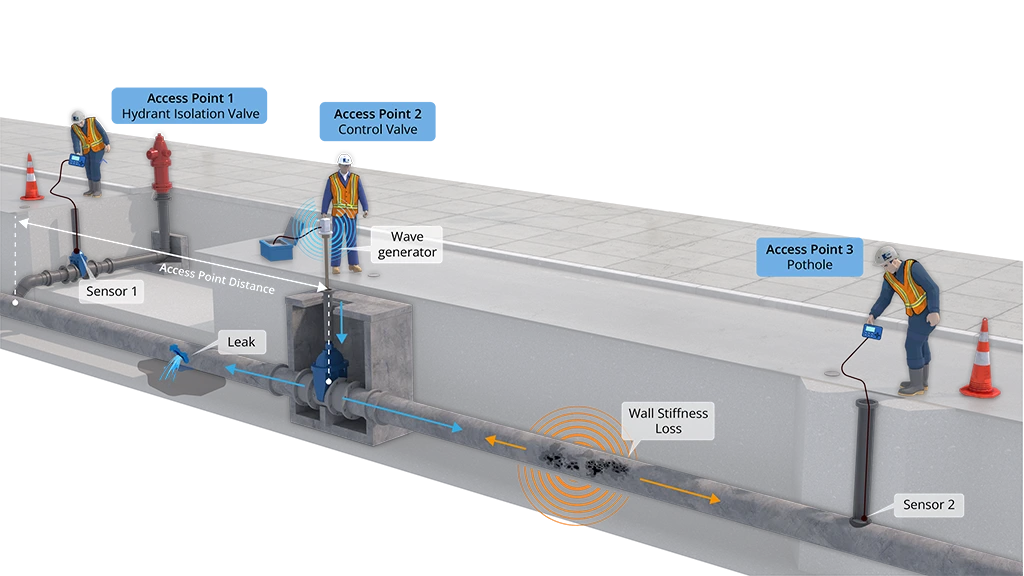
A Kappa vibration generator emits tailored vibration signals into the pipeline at predefined access points. These signals are tuned to resonate with the specific pipe material and size.
2. Data Collection
Two sensors capture the vibrations caused by the signals, allowing for the detection of how the pipe responds at different frequencies. This data reflects the pipe’s structural integrity.
3. Analysis and Reporting
The captured data is analyzed using sophisticated algorithms to map out the pipe’s condition. This includes assessing wall stiffness, detecting potential leaks, and estimating remaining service life, all compiled into a comprehensive report for utility decision-making.
Download the Brochure

Bucks County Water Main Condition Assessment
A Trenchless Technology feature highlights how RJN deployed a licensed implementation of KenWave’s Dynamic Response Imaging (DRI) solution to assess and extend the life of a 93-year-old Baltimore water main. The project demonstrates how non-destructive condition assessment enables evidence-based lifecycle decisions for aging transmission infrastructure.
Region of Peel: Large-Scale Metallic Watermain Condition Assessment
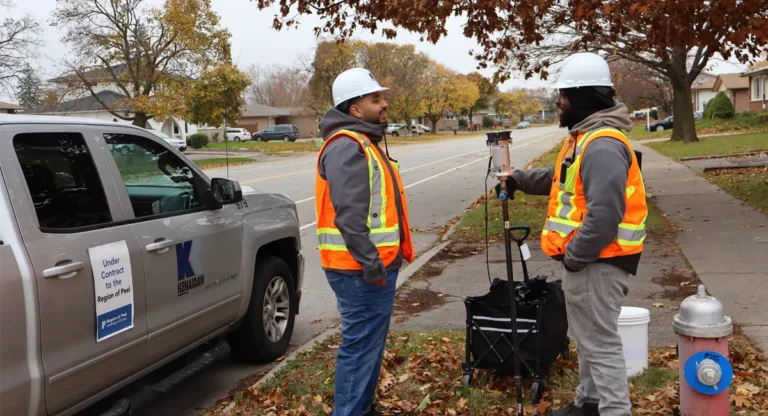
The Region of Peel assessed over 50 km (31 mi) of metallic watermains using non-invasive vibroacoustic inspection to strengthen its risk-based renewal framework. By integrating Dynamic Response Imaging™ data into its Decision Support System, the Region improved deterioration modeling, prioritized 22 km of high-risk mains for renewal, and optimized long-term capital planning.

Case Study: Thames Water
By integrating DRI™ survey outputs into its asset management framework, Thames Water was able to assess the appropriateness of planned £225M mains renewal investment.
A new standard in pipeline condition assessment
Our technology transcends the limitations of both internal and external tools by providing precise, non-invasive assessments that eliminate the disruption of internal methods and the low resolution of traditional external tools, setting a new standard in pipeline condition assessment.
We provide the detailed, actionable data utilities need to prioritize capital replacement projects, helping you focus resources on the pipelines that need attention most and extending the life of your infrastructure.
We deliver high-resolution, non-invasive condition assessments that identify issues like corrosion, wall thinning, and leaks at a sub-pipe stick level, empowering you to make proactive and precise maintenance decisions with confidence.